

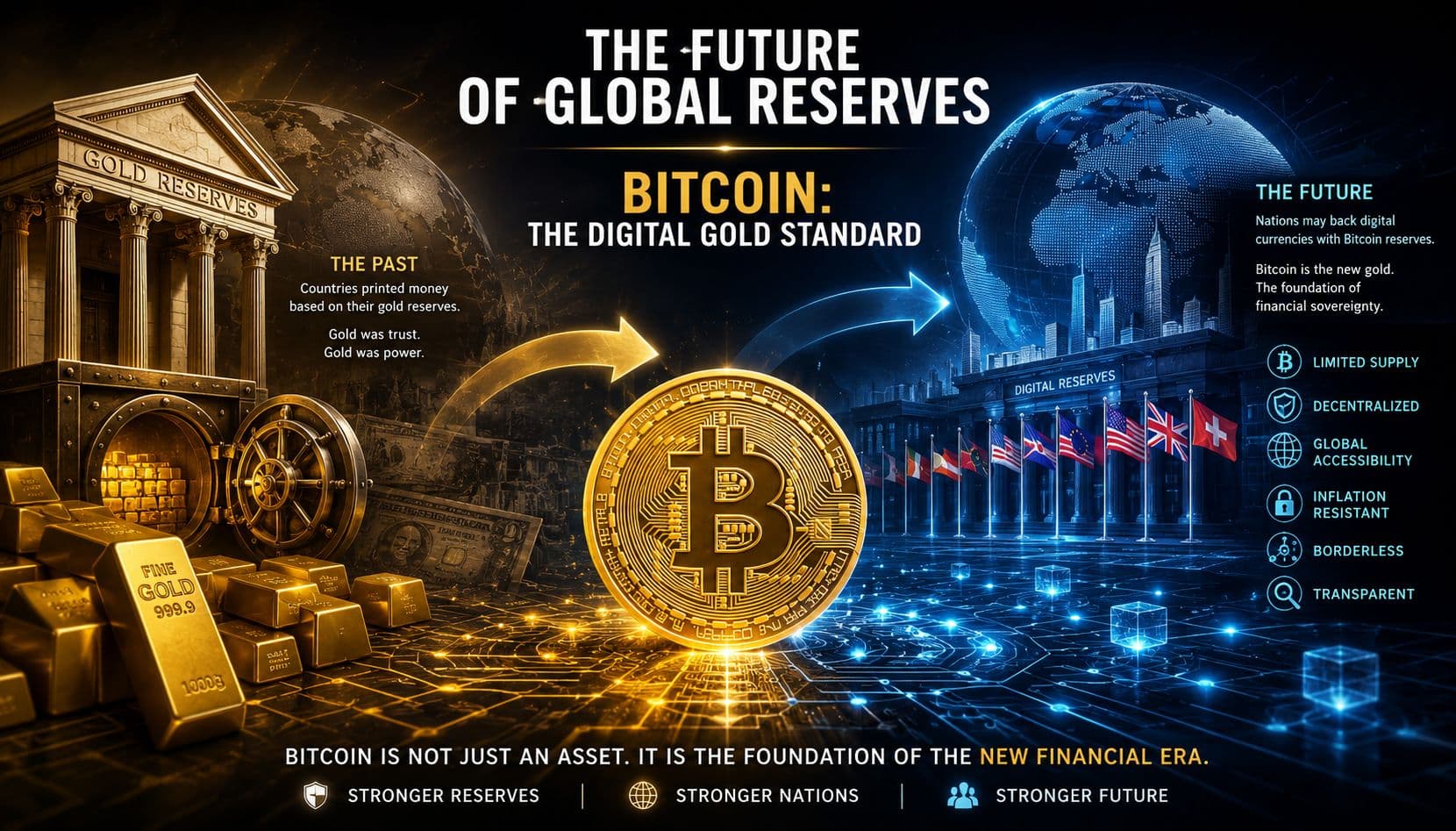
For decades, the global financial system has been built on confidence, central banking policies, and national reserves backed by strategic assets such as gold and foreign currencies. Historically, nations printed money according to the amount of gold stored in their reserves, creating a system where trust was directly connected to tangible value.
Today, we are entering a completely new financial era.
In my opinion, Bitcoin has the potential to become the modern equivalent of gold reserves for the digital age — a decentralized strategic asset capable of influencing how future economies issue value, protect wealth, and build financial sovereignty.
From Gold Reserves to Bitcoin Reserves
In the past, gold played a crucial role in monetary systems worldwide. Countries accumulated gold reserves to strengthen their currencies and increase international trust. The stronger the reserve, the stronger the perceived economic stability of that nation.
But the world is changing rapidly.
Technology, blockchain infrastructure, and decentralized finance are transforming how value is stored and transferred. Bitcoin, often referred to as "digital gold," possesses many characteristics that make it a strong candidate for becoming a strategic reserve asset in the future:
- Limited supply (21 million BTC)
- Decentralized structure
- Global accessibility
- Resistance to inflation
- High liquidity
- Borderless transferability
- Transparent blockchain verification
Unlike traditional fiat currencies, Bitcoin cannot be printed endlessly by governments or central banks. Its scarcity creates a new form of digital trust.
Why Bitcoin Is Called Digital Gold
Bitcoin is not simply another cryptocurrency.
It represents the first globally recognized decentralized monetary network that operates independently from political control. This creates a unique financial model where value is secured by mathematics, cryptography, and distributed consensus rather than centralized authority.
This distinction is extremely important.
Gold required physical storage, transportation, and military protection throughout history. Bitcoin, on the other hand, can be secured digitally while remaining instantly transferable anywhere in the world.
In an increasingly digital economy, this changes everything. You can read more about how these trends are discussed across the Ciprian Ciceu Blog.
Could Governments Back Digital Currencies with Bitcoin?
One of the most fascinating possibilities for the next decade is the idea that countries may eventually create national digital currencies backed partially by Bitcoin reserves.
Just as gold once supported the issuance of fiat money, Bitcoin could serve as a reserve layer for future blockchain-based monetary systems.
Imagine a future where:
- Central banks hold Bitcoin in national reserves
- Governments issue stable digital currencies backed by BTC holdings
- Countries compete to accumulate Bitcoin reserves similarly to gold accumulation in the past
- Financial strength is measured not only in foreign currency reserves but also in digital asset reserves
This concept may sound futuristic today, but many governments and institutional investors have already begun exploring Bitcoin as a strategic reserve asset.
How Blockchain Is Reshaping Global Finance
We are witnessing the beginning of a major transition in global finance.
Traditional banking systems are evolving. Blockchain technology is expanding rapidly. Artificial intelligence, tokenization, and decentralized ecosystems are reshaping the future of money.
Younger generations are already adopting digital assets faster than traditional investment models. Institutional adoption is growing. Major financial companies are integrating Bitcoin-related products into their portfolios.
The question is no longer whether digital assets will influence the global economy.
The real question is:
How large will their role become?
Why Bitcoin Could Become a Strategic Reserve Asset
In the coming years, it is possible that nations will divide into two categories:
- Countries that adapt early to digital reserve assets
- Countries that react too late to the transformation
Those who understand the importance of blockchain infrastructure, digital ownership, and decentralized reserves may gain significant economic advantages in the future global economy.
Bitcoin could eventually become:
- A strategic reserve asset
- A hedge against monetary inflation
- A foundation for national digital currencies
- A global settlement layer for international finance
The Future of Financial Sovereignty
Financial sovereignty — the ability of a nation or individual to control their own monetary destiny — is becoming one of the defining challenges of the 21st century.
As central banks experiment with digital currencies and governments explore blockchain-based financial infrastructure, Bitcoin stands apart as the only truly neutral, decentralized reserve option.
It belongs to no government, no corporation, and no single jurisdiction. That neutrality is precisely what makes it powerful as a potential global reserve asset.
For a broader perspective on fintech and financial innovation, visit Ciprian Ciceu's official website.
Final Thoughts on the Future of Bitcoin
History has shown that every major economic era introduces a new reserve standard.
Gold dominated the industrial era.
Fiat currencies dominated the banking era.
The digital era may introduce a new form of reserve value:
Bitcoin.
Whether this transformation happens gradually or rapidly, one thing is becoming increasingly clear:
The relationship between money, technology, and sovereignty is evolving faster than ever before.
And Bitcoin may ultimately become one of the most important financial assets of the 21st century.
— Ciprian Ciceu
Fintech Entrepreneur | Blockchain Advisor | Founder of Mainet X
Disclaimer: This article reflects personal opinions and is intended for educational and informational purposes only. It does not constitute financial or investment advice.